1. Introduction: Healthcare Careers Beyond MBBS
When students think of a career in healthcare, the first option that comes to mind is often becoming a doctor through MBBS. However, the reality is that the healthcare ecosystem is vast and requires diverse professionals working together.
Paramedical professionals form the backbone of modern healthcare systems, working alongside doctors to provide critical diagnostic, therapeutic, and rehabilitative services. In 2026, with the healthcare industry experiencing unprecedented growth, paramedical courses have emerged as one of the smartest career choices for science students after 12th.
The best part? These courses are shorter in duration, more affordable, and offer excellent job security with competitive salaries.
2. Why Choose Paramedical Courses in 2026?
Growing Healthcare Industry
India's healthcare sector is projected to reach $372 billion by 2026, creating millions of jobs for skilled paramedical professionals. The post-pandemic world has recognized the critical importance of diagnostic and therapeutic services.
Cost-Effective Education
While MBBS can cost ₹50-80 lakhs (or more in private colleges), paramedical courses typically range from ₹50,000 to ₹3 lakhs, making quality healthcare education accessible to middle-class families.
Quick Entry into Workforce
Most paramedical diplomas and degrees can be completed in 1-4 years, allowing you to start earning much earlier than MBBS graduates who spend 5.5+ years studying.
** Global Opportunities**
Paramedical professionals are in high demand worldwide, especially in countries like the USA, UK, Canada, Australia, and Gulf nations, offering excellent migration and career growth opportunities.
Diverse Career Paths
From diagnostic imaging to physiotherapy, laboratory technology to optometry, the paramedical field offers specialized career paths that match different interests and aptitudes.
3. Top Paramedical Specializations with High Demand
Bachelor of Medical Laboratory Technology (BMLT)
Duration: 3-4 years
Role: Conduct diagnostic tests, analyze body fluids, and assist in disease detection
Career Scope: Hospitals, diagnostic labs, research centers, blood banks
Starting Salary: ₹2.5 - ₹4 lakhs per annum
Role: Conduct diagnostic tests, analyze body fluids, and assist in disease detection
Career Scope: Hospitals, diagnostic labs, research centers, blood banks
Starting Salary: ₹2.5 - ₹4 lakhs per annum
Bachelor in Radiology & Imaging Technology (BRIT)
Duration: 3-4 years
Role: Operate X-ray, CT scan, MRI, and ultrasound equipment for diagnostic imaging
Career Scope: Multi-specialty hospitals, diagnostic centers, imaging clinics
Starting Salary: ₹3 - ₹5 lakhs per annum
Role: Operate X-ray, CT scan, MRI, and ultrasound equipment for diagnostic imaging
Career Scope: Multi-specialty hospitals, diagnostic centers, imaging clinics
Starting Salary: ₹3 - ₹5 lakhs per annum
Bachelor of Physiotherapy (BPT)
Duration: 4.5 years
Role: Help patients recover from injuries, manage pain, and improve mobility
Career Scope: Hospitals, sports clinics, rehabilitation centers, private practice
Starting Salary: ₹3 - ₹6 lakhs per annum.
Role: Help patients recover from injuries, manage pain, and improve mobility
Career Scope: Hospitals, sports clinics, rehabilitation centers, private practice
Starting Salary: ₹3 - ₹6 lakhs per annum.
Bachelor of Optometry (B.Optom)
Duration: 4 years
Role: Diagnose vision problems, prescribe corrective lenses, and manage eye care
Career Scope: Eye hospitals, optical chains, private clinics, vision care centers
Starting Salary: ₹2.5 - ₹4.5 lakhs per annum
Role: Diagnose vision problems, prescribe corrective lenses, and manage eye care
Career Scope: Eye hospitals, optical chains, private clinics, vision care centers
Starting Salary: ₹2.5 - ₹4.5 lakhs per annum
Bachelor of Occupational Therapy (BOT)
Duration: 4.5 years
Role: Help patients develop or recover daily living and work skills
Career Scope: Rehabilitation centers, mental health facilities, schools, hospitals
Starting Salary: ₹3 - ₹5 lakhs per annum
Role: Help patients develop or recover daily living and work skills
Career Scope: Rehabilitation centers, mental health facilities, schools, hospitals
Starting Salary: ₹3 - ₹5 lakhs per annum
Diploma in Operation Theatre Technology (DOTT)
Duration: 2 years
Role: Assist surgeons during operations, maintain sterile environment, manage OT equipment
Career Scope: Surgical centers, multi-specialty hospitals, trauma centers
Starting Salary: ₹2 - ₹3.5 lakhs per annum
Role: Assist surgeons during operations, maintain sterile environment, manage OT equipment
Career Scope: Surgical centers, multi-specialty hospitals, trauma centers
Starting Salary: ₹2 - ₹3.5 lakhs per annum
4. Eligibility & Admission Process
Basic Eligibility Criteria:
- Educational Qualification: 10+2 (Higher Secondary) with PCB (Physics, Chemistry, Biology) or PCM (Physics, Chemistry, Mathematics)
- Minimum Marks: Generally 50% aggregate (45% for reserved categories)
- Age Limit: Usually 17-25 years (varies by course and institution)
- Medical Fitness: Must be medically fit
Admission Process:
- Application Form: Fill online or offline application
- Entrance Exam: Some colleges conduct entrance tests (others offer direct admission based on 12th marks)
- Counseling: Attend counseling session for seat allocation
- Document Verification: Submit required documents
- Fee Payment: Complete admission formalities
Required Documents:
- 10th & 12th mark sheets and certificates
- Transfer Certificate (TC)
- Character Certificate
- ID Proof (Aadhaar Card)
- Passport-size photographs
- Category certificate (if applicable)
5. Career Growth & Salary Expectations
Entry Level (0-2 years):
- Salary Range: ₹2 - ₹4 lakhs per annum
- Roles: Junior Technician, Trainee, Staff Physiotherapist
Mid-Level (3-7 years):
- Salary Range: ₹4 - ₹8 lakhs per annum
- Roles: Senior Technician, Department Supervisor, Chief Optometrist
Senior Level (8+ years):
- Salary Range: ₹8 - ₹15+ lakhs per annum
- Roles: Department Head, Lab Manager, Clinical Director, Consultant
Entrepreneurship Opportunities:
Many paramedical professionals successfully start their own:
- Diagnostic laboratories
- Physiotherapy clinics
- Optical stores
- Imaging centers
- Rehabilitation facilities
Government Job Opportunities:
- AIIMS, PGIMER, JIPMER
- State and central government hospitals
- Railways, Defense Services, ESIC
- Public Health Departments
6. Skills Required for Success
Technical Skills:
- Proficiency in operating medical equipment
- Understanding of medical terminology
- Knowledge of safety protocols and infection control
- Computer literacy for digital health records
Soft Skills:
- Attention to Detail: Critical for accurate diagnosis and patient care
- Communication Skills: Ability to explain procedures to patients clearly
- Empathy & Compassion: Essential for patient interaction
- Teamwork: Collaborating with doctors, nurses, and other healthcare professionals
- Problem-Solving: Quick decision-making in emergency situations
- Physical Stamina: Ability to stand for long hours and assist patients
7. How to Choose the Right Paramedical College
Choosing the right institution is crucial for your career success. Here are the essential factors to consider:
✅ Accreditation & Recognition
- Ensure the college is recognized by relevant authorities (University, State Government, Allied Health Council)
- Check affiliation with reputed universities
✅ Infrastructure & Labs
- Modern, well-equipped laboratories with latest technology
- Adequate practical training facilities
- Library with updated medical literature
✅ Experienced Faculty
- Qualified professors with industry experience
- Good student-teacher ratio
- Regular training and workshops
✅ Clinical Exposure & Internships
- Tie-ups with multi-specialty hospitals
- Mandatory internship programs
- Real-world clinical training opportunities
✅ Placement Record
- Track record of student placements
- Industry connections and campus recruitment
- Career counseling and placement assistance
✅ Location & Facilities
- Safe and accessible location
- Hostel facilities for outstation students
- Transportation, cafeteria, and other amenities
8. Conclusion & Next Steps
Paramedical courses offer a practical, rewarding, and financially viable pathway into the healthcare industry. With shorter course durations, lower costs, and excellent job prospects, they represent one of the smartest career investments you can make after 12th.
The healthcare sector's continuous growth, combined with increasing demand for diagnostic and therapeutic services, ensures that paramedical professionals will remain in high demand for decades to come.
Ready to Start Your Healthcare Career?
If you're looking for a premier institution that combines academic excellence with practical training and industry connections, consider:
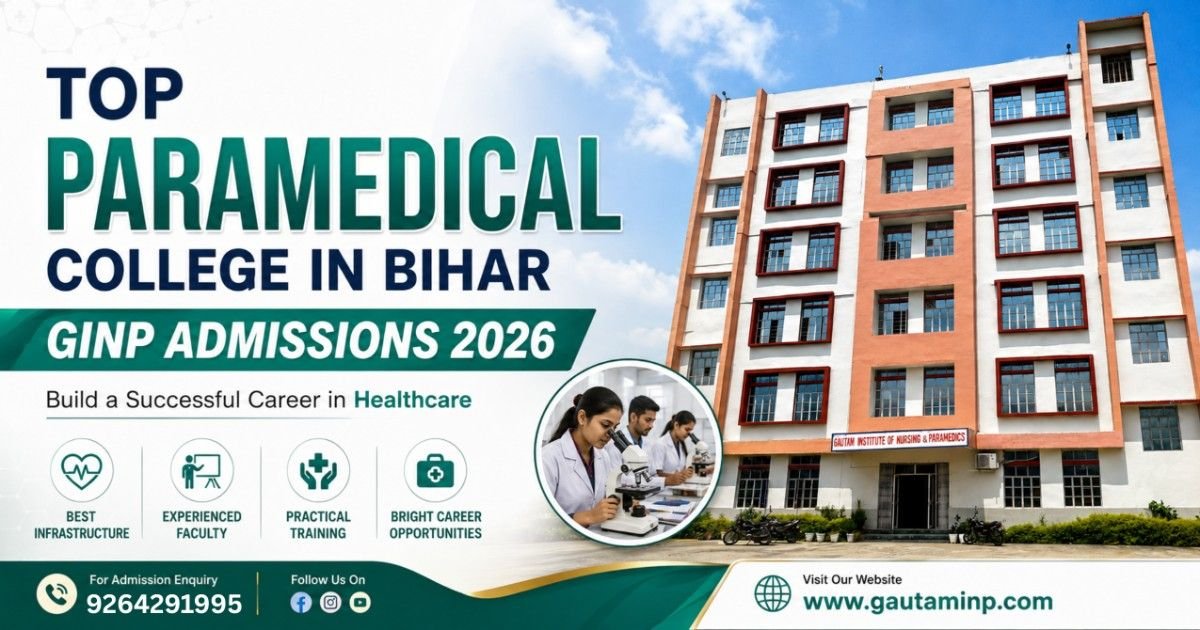
Gautam Institute of Nursing and Paramedics (GINP)
Location: Bihar Sharif, Bihar
Courses Offered: BPT, BOT, BMLT, B.Optom, BRIT, DMLT, OTT, and more
Location: Bihar Sharif, Bihar
Courses Offered: BPT, BOT, BMLT, B.Optom, BRIT, DMLT, OTT, and more
Why Choose GINP?
✅ Recognized and affiliated institution established in 2011
✅ State-of-the-art laboratories and modern infrastructure
✅ Expert faculty with extensive industry experience
✅ Strong hospital tie-ups for clinical training and internships
✅ Dedicated placement cell with excellent track record
✅ Comprehensive facilities: Library (10,000+ books), hostels, sports complex, medical facilities
✅ Focus on holistic development and practical skills
✅ State-of-the-art laboratories and modern infrastructure
✅ Expert faculty with extensive industry experience
✅ Strong hospital tie-ups for clinical training and internships
✅ Dedicated placement cell with excellent track record
✅ Comprehensive facilities: Library (10,000+ books), hostels, sports complex, medical facilities
✅ Focus on holistic development and practical skills
Admissions Open for 2026-27 Session!
Don't miss this opportunity to build a successful career in healthcare.
Don't miss this opportunity to build a successful career in healthcare.
Visit our official website for detailed course information, fee structure, and online admission:
gautaminp.com
Your journey to becoming a skilled healthcare professional starts here!
Frequently Asked Questions (FAQs)
Q1: Are paramedical courses good career options after 12th?
Answer: Absolutely! Paramedical courses offer excellent career opportunities with growing demand, competitive salaries, and job security. The healthcare industry's expansion ensures abundant opportunities for skilled paramedical professionals.
Answer: Absolutely! Paramedical courses offer excellent career opportunities with growing demand, competitive salaries, and job security. The healthcare industry's expansion ensures abundant opportunities for skilled paramedical professionals.
Q2: Can I pursue paramedical courses without NEET?
Answer: Yes, most paramedical courses do not require NEET. Admissions are typically based on 12th marks or institute-level entrance exams. However, some government colleges may conduct their own entrance tests.
Answer: Yes, most paramedical courses do not require NEET. Admissions are typically based on 12th marks or institute-level entrance exams. However, some government colleges may conduct their own entrance tests.
Q3: What is the average salary after completing paramedical courses?
Answer: Starting salaries typically range from ₹2.5 to ₹5 lakhs per annum, depending on the specialization and institution. With experience, salaries can increase significantly to ₹8-15 lakhs or more.
Answer: Starting salaries typically range from ₹2.5 to ₹5 lakhs per annum, depending on the specialization and institution. With experience, salaries can increase significantly to ₹8-15 lakhs or more.
Q4: Which paramedical course has the highest salary potential?
Answer: Courses like BPT (Physiotherapy), BRIT (Radiology), and BOT (Occupational Therapy) generally offer higher starting salaries and excellent growth potential, especially in private practice and specialized hospitals.
Answer: Courses like BPT (Physiotherapy), BRIT (Radiology), and BOT (Occupational Therapy) generally offer higher starting salaries and excellent growth potential, especially in private practice and specialized hospitals.
Q5: Is there scope for higher studies after paramedical courses?
Answer: Yes, you can pursue master's degrees (MPT, M.Optom, M.Sc. in respective fields), Ph.D., or specialized certifications to enhance your career prospects and earning potential.
Answer: Yes, you can pursue master's degrees (MPT, M.Optom, M.Sc. in respective fields), Ph.D., or specialized certifications to enhance your career prospects and earning potential.